Release Notes Format: Which Structure Works Best for Enterprise Teams?


If you ran a 500-person engineering organization where every team shipped independently, you would eventually notice a pattern. The platform team writes release notes that read like a git commit log. The frontend team writes notes that read like a marketing brochure. The mobile team forgets to write them entirely.
When the VP of Customer Success asks what changed in the last release, nobody can give a straight answer. The support team is fielding tickets about a "bug fix" that was actually a planned deprecation. The sales team is pitching a feature that hasn't shipped yet.
The problem isn't that the teams picked the wrong release note format. The problem is that they picked different formats.
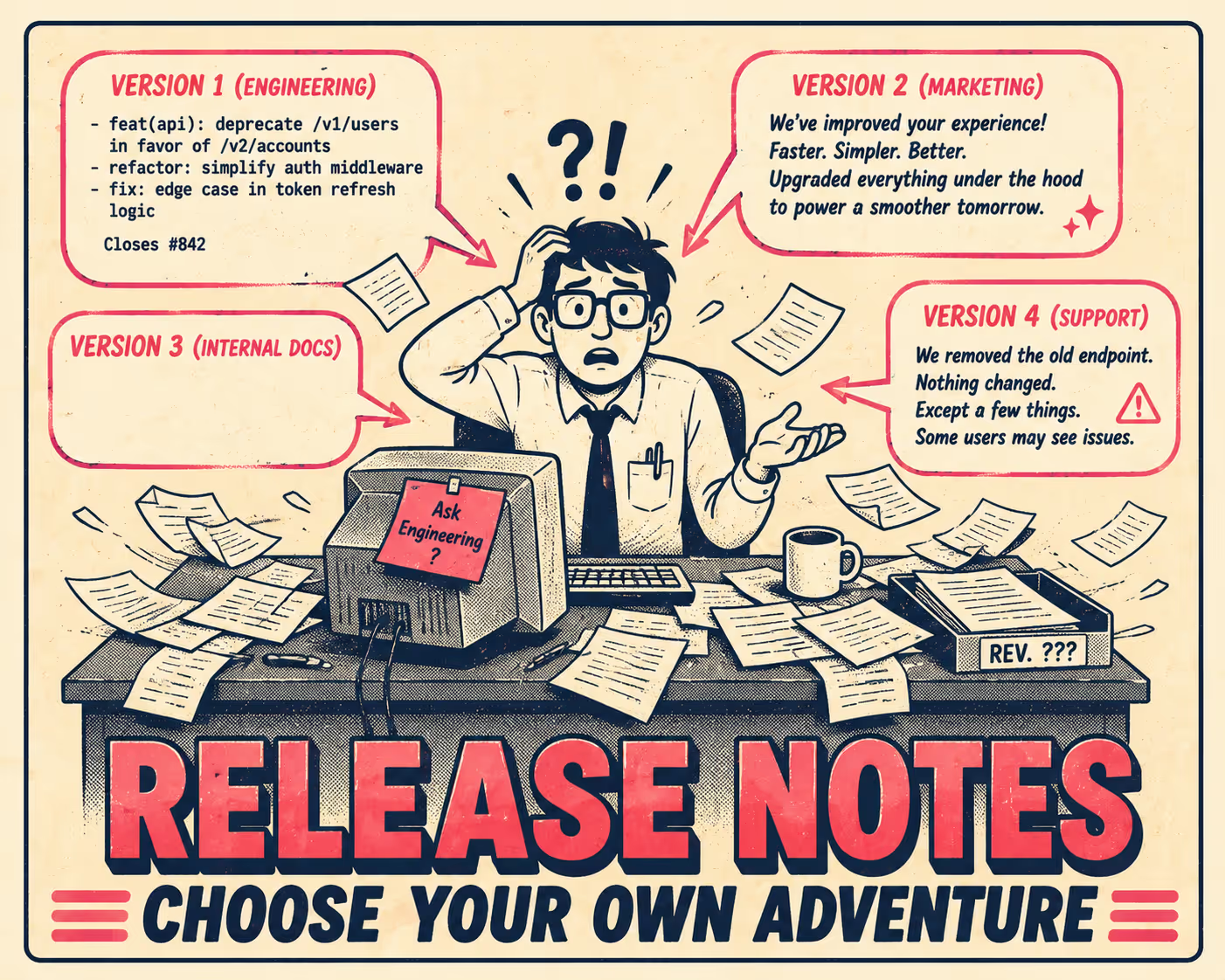
There is no universal best structure. The right format depends on audience segmentation, release cadence, and whether the organization ships monolithically or in streams. But enterprises fail most often not because they picked the wrong template, but because they never enforced it.
Anyway. We have a governance problem, and we are trying to solve it with a template.
Let's look at the options.
The Formats That Actually Get Used
The traditional approach is chronological: you list changes by version number and date. It is the structure behind the Keep a Changelog standard, which formalizes the intuition that "a changelog is for humans, not machines." For monolithic quarterly releases or teams still on a release train, this works fine. It provides a clear historical record of what changed and when.
But under continuous deployment, this structure falls apart. When teams deploy multiple times a day, a chronological list becomes a firehose of minor updates. It overwhelms readers. It fails to distinguish between a critical security patch and a minor UI tweak. It treats every change as equally important, which means nothing is important.
The most common default for modern SaaS companies is categorization by type: New Features, Improvements, Bug Fixes, Deprecations. It is excellent for scanning. Users can skip the bug fixes and focus on new features. It works well for products with a highly technical customer base who understand the terminology. Stripe's redesigned developer changelog is a good example of this done well at scale, with filtering by API version and concise summaries of what changed and why.
But categorization alone doesn't convey impact. A "Bug Fix" might be a minor typo correction, or it might be the resolution of a critical data loss issue. The category tells you what kind of change it was, not whether you need to care.
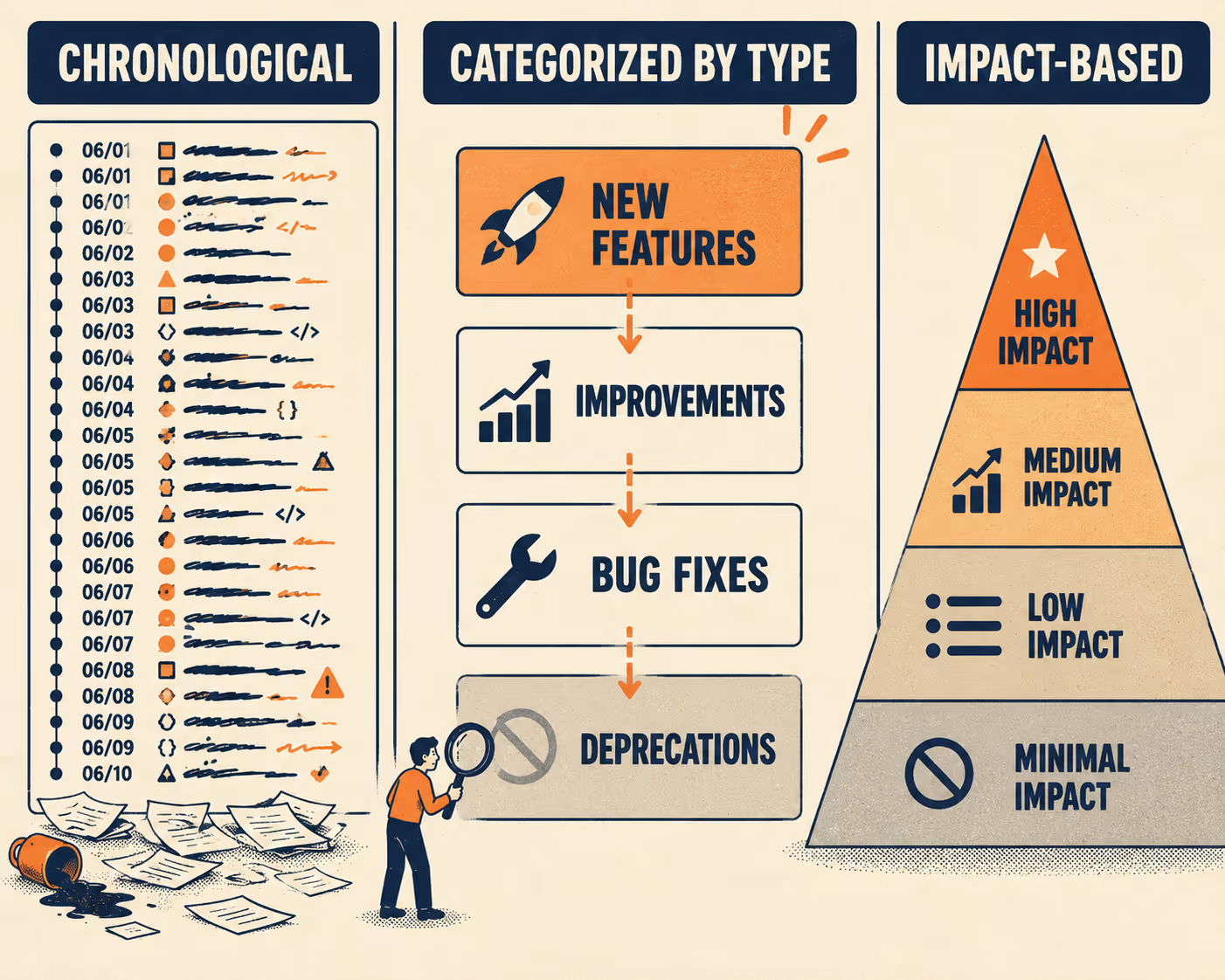
The impact-based approach addresses this. It prioritizes changes based on their effect on the user: breaking changes and required actions come first, then enhancements, then minor fixes. This is particularly effective for proving ROI to executive buyers, because it focuses on value delivered rather than technical implementation. The downside is that "impact" requires subjective judgment, which creates inconsistencies across teams if not strictly governed.
The most ambitious format is audience segmentation: different versions of release notes for different readers. One version for the customer, one for the internal support team, one for the developers integrating your API. An empirical study of release note production across 32,425 GitHub projects found significant discrepancies between what release note producers think is important and what users actually need. Segmenting by audience is the most direct solution to that gap.
But it requires immense discipline to maintain. Without automation, product managers or technical writers end up writing two or three versions of everything. This creates a translation tax that slows down delivery and often leads to outdated or inconsistent documentation.
Why Enterprises Get This Wrong
The failure mode isn't picking the wrong format. It's picking no format, or picking one and not enforcing it.
A comprehensive analysis of release note challenges on GitHub found that nearly half of all issues relate to the production process itself: who writes the notes, when, from what source, and with what level of review. The format is the easy part. The hard part is getting twelve teams to follow the same format, consistently, across every release.
This is a governance problem. And governance at scale requires automation, not just guidelines.
The 2023 DORA State of DevOps report found that high-quality documentation drastically increases the effectiveness of technical capabilities on organizational performance. Teams that treat documentation as an afterthought don't just have worse docs; they have worse outcomes. The documentation debt compounds.
Manual compliance processes don't scale. As Carl Nygard documented on martinfowler.com, manual review processes in large organizations become bottlenecks that teams actively work around. The same dynamic applies to release notes: when the process is painful enough, teams stop doing it, or they do it badly. The result is what you already have: a coordination disaster.
The Decision Framework
If you ship continuously and have multiple product lines, audience segmentation is your best bet. But only if you have tooling that can enforce it.
If you're still on a release train, chronological works fine.
If your customer base is highly technical, categorized-by-type is enough.
If you're trying to prove ROI to executive buyers, impact-based structures win.
The worst choice is no choice. Letting every team do it differently and hoping documentation debt doesn't become a customer trust problem is not a strategy.
You cannot ask your engineering team to manually write outcome-driven release notes for every minor update. They won't do it. And you cannot ask your product managers to manually translate every commit into business value. They don't have the time.
The solution is to define the structure once, and generate the formatted output programmatically.
Doc Holiday generates release notes in any of these formats directly from engineering workflows. It categorizes by type, segments by audience, and tags by impact level. The structure is baked into the system, not dependent on individual discipline. A technical writer or product ops lead governs the output and manages exceptions, but the baseline work is automated and consistent across teams.