How Long Should Release Notes Be?


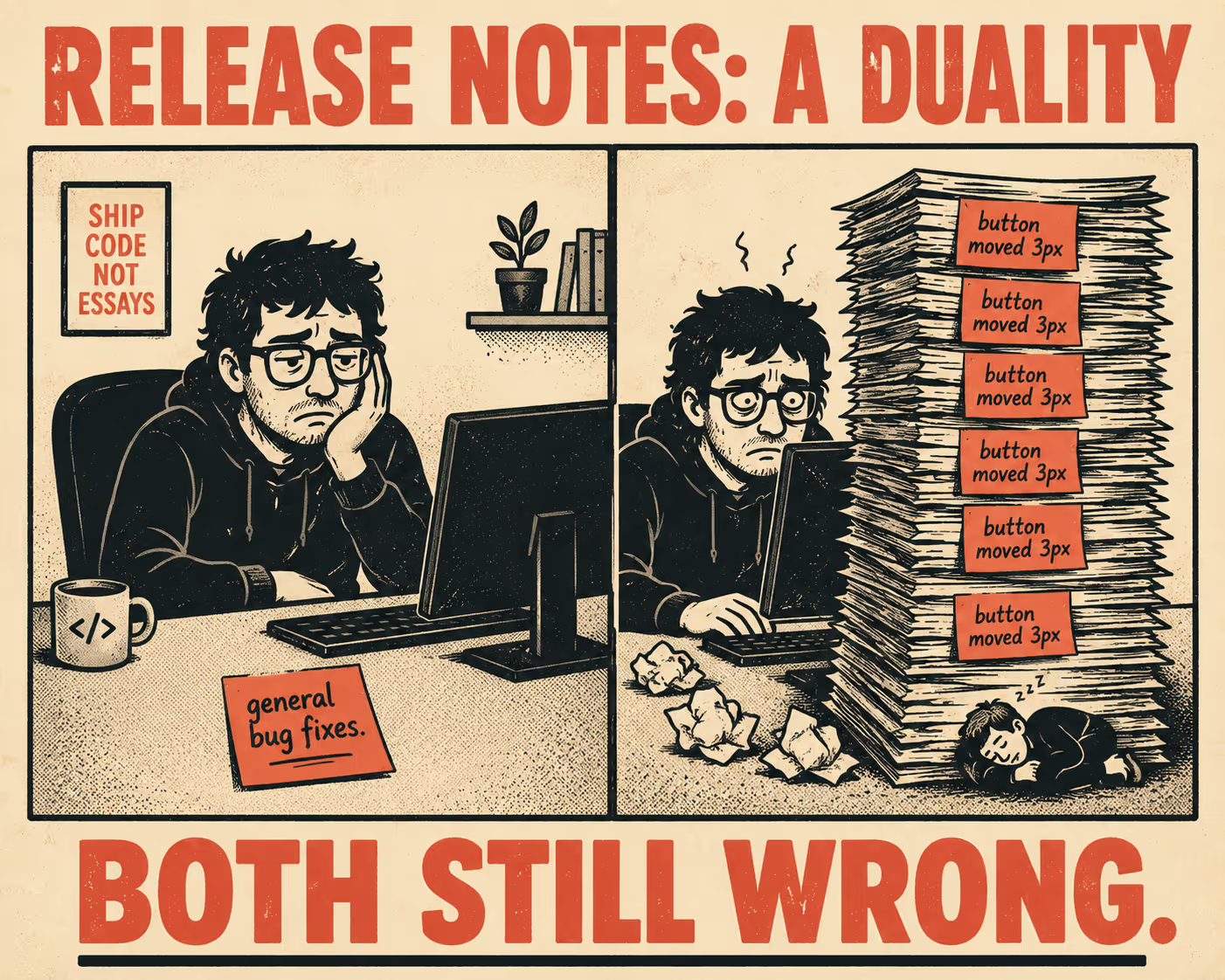
Somewhere in your backlog right now, there is a release note that says "general bug fixes and improvements." Somewhere else, there is a 1,200-word migration guide for a change that moved a button three pixels to the left.
Both are wrong. And the reason teams keep making both mistakes is that they're treating release note length as a formatting question when it's actually an audience question.
The answer to how long release notes should be is not a single word count. It's a framework based on who is reading and what they need to do. Release notes should be exactly as long as the user's need to understand the change, and not a word longer.
For most teams, this breaks down into three distinct length tiers: Micro (1–3 sentences), Standard (100–300 words), and Deep (500+ words). The tier is dictated by the scope of the change, the risk of misunderstanding, and whether the user actually needs to do anything about it.
The Micro Tier: 1–3 Sentences
Some changes just happen. Internal hotfixes, minor dependency bumps, or backend refactors with no user-visible impact. The reader needs to know it happened, and then they need to move on.
Micro release notes are for changes that require zero action and carry zero risk for the user. They are the equivalent of a nod in the hallway.
Good examples: "Bumped lodash from 4.17.20 to 4.17.21 to address a security vulnerability." "Fixed an issue where the submit button would occasionally double-fire on slow connections." "Refactored the authentication middleware to improve performance."
What doesn't belong here: changes that alter the UI, deprecations, or anything that requires the user to change their code or workflow. Those need more room.
The most common mistake with Micro notes is being too vague. "General bug fixes and improvements" is not a release note; it is a confession that you didn't track your work. Even at one sentence, the note must describe the actual change. The Keep a Changelog standard puts it plainly: changes should be self-describing and written in the imperative mood. "Fix infinite loop" tells you something. "Improvements" tells you nothing.
The Standard Tier: 100–300 Words
This is where most product releases live. A new feature, a significant enhancement, or a workflow change. The user needs to know what changed, why it matters, and what they should do next.
A well-structured Standard release note has a specific anatomy. It starts with a summary line that states the change. It follows with a context paragraph explaining the value or the problem solved. It ends with action items, if any are needed.
Consider how Stripe handles their API changelog. When they introduce a new feature, they don't just list the endpoint. They explain the context. "Custom payment methods are now visible on the customer portal, enabling customers to easily view which payment method has been used." It gives the what and the why, without turning into a novel.
The failure mode for Standard notes is burying the lede. Teams often start with the technical implementation details rather than the user impact. The user does not care that you migrated from Postgres to DynamoDB; they care that their queries are now twice as fast.
The Deep Tier: 500+ Words
Sometimes, things break. Major version releases, breaking API changes, or entirely new paradigms that require setup. These are the changes that demand investment from the user, and therefore demand investment from the writer.
Deep release notes are not just announcements; they are migration guides. They need code samples, decision trees, and clear explanations of the architectural shift. When Stripe introduced their new API release process, they didn't just drop a bulleted list. They wrote a comprehensive guide explaining the new semiannual major updates, the monthly feature enhancements, and how the new versioning system works.
The investment is worth it when the cost of user confusion is high. If a change will break a customer's integration, a 500-word explanation is cheaper than 50 support tickets.
But it is overkill for almost everything else. The cognitive load of technical documentation is a real constraint. Our working memory can only handle so much information at once. When documentation demands more cognitive resources than the reader has available, comprehension fails. Deep notes that turn into unstructured essays violate this principle. They must be highly structured, with clear headers and scannable sections.
The Decision Framework
How do you choose? You don't guess. You ask a series of questions.
Does this change require the user to take action? If yes, it is at least a Standard note. If it requires significant migration, it is a Deep note. Does this change alter the user interface or core workflow? Standard. Is this a breaking change? Deep. Is this a backend change with no visible impact? Micro.
This maps cleanly onto Semantic Versioning practices. Major releases (breaking changes) warrant Deep notes. Minor releases (new features, non-breaking) warrant Standard notes. Patch releases (bug fixes) warrant Micro notes. The version number is already telling your users how much to care; the release note length should confirm it.
What Never Belongs
Regardless of length, some things simply do not belong in release notes.
Marketing copy is the most common offender. Release notes are operational documents, not a second chance to write the product announcement. If the feature is good, the note describing what it does will speak for itself. Speculative roadmap talk is equally dangerous; tell the user what shipped, not what might ship next quarter. Defensiveness about delays or bugs is unprofessional and signals that the team is writing for itself rather than for the user. And overly technical internals that don't affect the user, like the fact that you switched from one internal library to another, just add noise without adding value.
The Common Changelog style guide makes a useful distinction here: a changelog is not a blog post or a detailed upgrade guide. Those have different goals and must be kept separate. The release note is the signal; everything else is supporting material.
The Automation Factor
The cadence of modern software development complicates all of this. Continuous deployment means teams are shipping constantly. Frequent releases have been shown to increase developer job satisfaction and reduce burnout, but they create a documentation burden that compounds with every deploy.
When you ship ten times a day, manual release notes become impossible. Teams turn to automation, often using GitHub Actions to generate lists of merged PRs. But a list of PRs is not a release note. It is an audit trail. It tells you what merged; it doesn't tell you what changed for the user or why it matters.
This is where the length decision shifts from the writer to the system. When the Doc Holiday documentation platform generates release notes directly from commit data and PRs, teams can focus their discipline on the commit message layer. The AI generates a first draft that groups related technical changes into coherent narratives and applies the right length tier based on the scope of the changes. A technical lead reviews the draft in a dashboard, validating the output rather than assembling it from scratch. The structure it provides, validated by a human who understands the product, ensures the right level of detail reaches the right audience without a manual rewrite every time.