How to Reduce Documentation Lag After a Software Release


An engineering team ships a highly anticipated feature on a Tuesday afternoon. The code is merged, the deployment is successful, and the champagne is popped. But by Thursday morning, the support queue is flooded with tickets from confused users, the sales team is asking for talking points they don't have, and the product manager is spending half their day answering "what exactly changed?" in Slack.
The code shipped, but the release didn't happen. The documentation is still stuck in a Google Doc waiting for three different approvals.
This is documentation lag. It happens because the mechanical process of writing about software has not kept pace with the mechanical process of shipping it. Engineering ships code continuously, but someone still has to manually review commits or tickets, draft release notes, wait for stakeholders to review them, apply formatting, and wait on publishing approvals. This process made sense when releases were monthly. It breaks down entirely under weekly or daily deployment cadences.
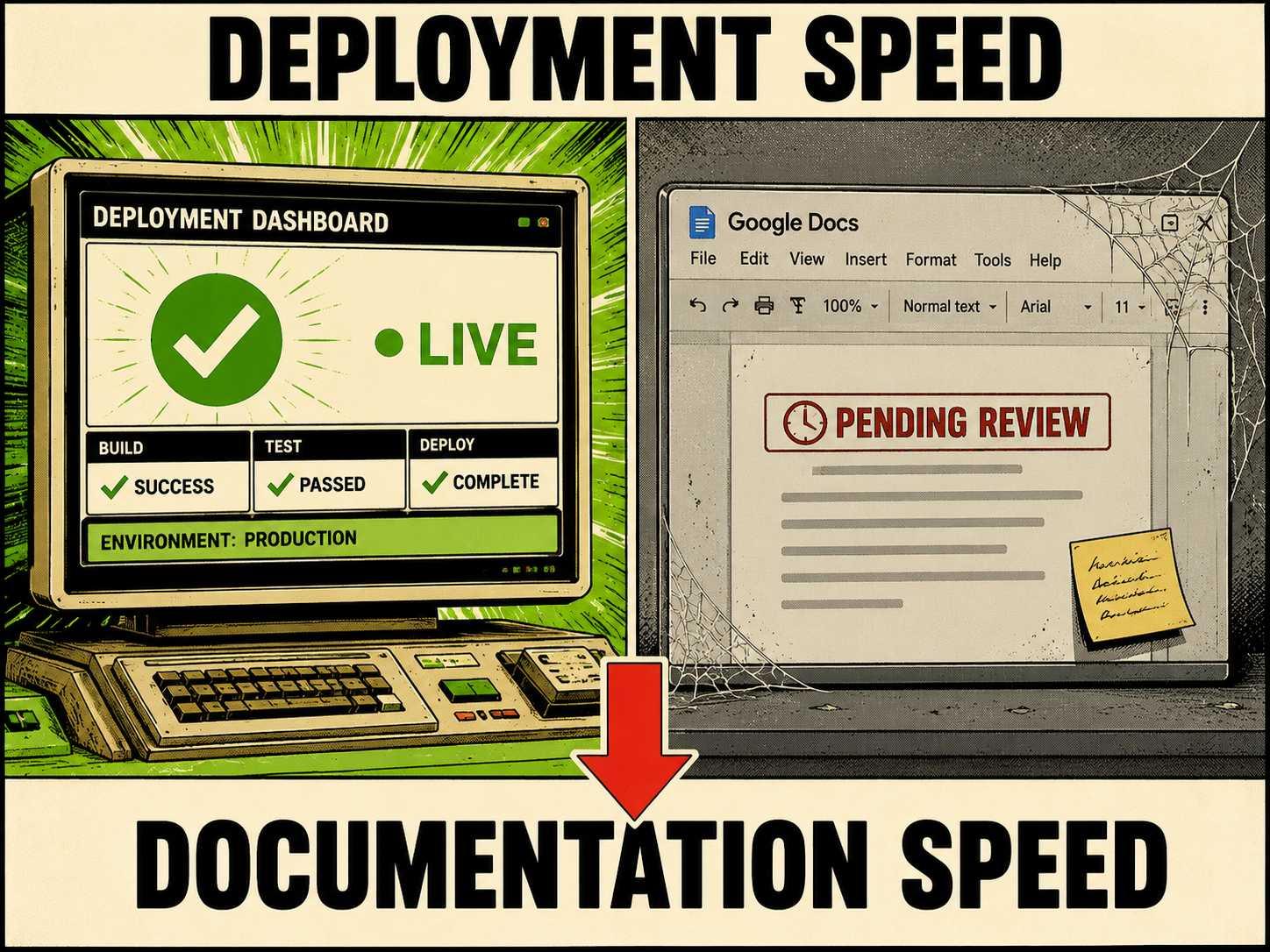
According to the 2024 DORA State of DevOps Report, elite engineering teams deploy on demand, with changes taking less than a day to move through the pipeline. But the documentation for those changes often takes days or weeks to catch up. A large-scale empirical study of 32,425 release notes found that producing them is a collaborative, time-consuming task that varies wildly depending on the stakeholders involved.
Anyway. We can all now deploy code multiple times a day, and seem to be having trouble figuring out how to tell anyone what we actually built.
The operational fallout of this lag is expensive. When documentation trails deployment, support teams field preventable tickets. Customer success can't proactively message users about changes. Sales lacks talking points for competitive situations. Product managers become human routers for basic questions.
The cost is measurable. Poor documentation practices cost mid-sized engineering teams $500K to $2M annually in lost productivity, context switching, and rework. Developers spend 15-25% of their capacity compensating for missing or outdated documentation. When users can't find answers themselves, they open tickets. Zendesk data shows that effective self-service documentation is the primary driver of ticket deflection, allowing support agents to focus on complex issues rather than answering "where did this button go?" for the fiftieth time.
The instinct, when faced with this problem, is to yell at the technical writers to work faster, or to force engineers to write their own release notes before they can merge a pull request.
Neither works. Technical writers are bottlenecked by the need to extract information from engineers who have already moved on to the next sprint. Engineers hate writing documentation and will do the bare minimum to satisfy the requirement, resulting in release notes that say "fixed bug" or "updated API."
The solution is not to change the culture. The solution is to change the system.
Documentation generation relying on annotations or reflection has been around for a while, but it requires engineers to maintain strict metadata. The modern approach treats documentation as a byproduct of the engineering workflow itself.
If the system knows what code changed, what tickets were closed, and what pull requests were merged, it can generate the baseline documentation automatically. This is not about replacing technical writers. It is about changing their job from "archaeologist trying to figure out what happened last week" to "editor refining the narrative of what we built."
Consider a team that deploys twice a week and previously took three to five days to publish release notes. After moving to a system that generates notes directly from engineering artifacts, the lag drops to same-day or next-day. The support team stops getting "what changed?" tickets. The technical writer who used to manually compile changelogs now spends time writing onboarding guides and reviewing AI output for edge cases.
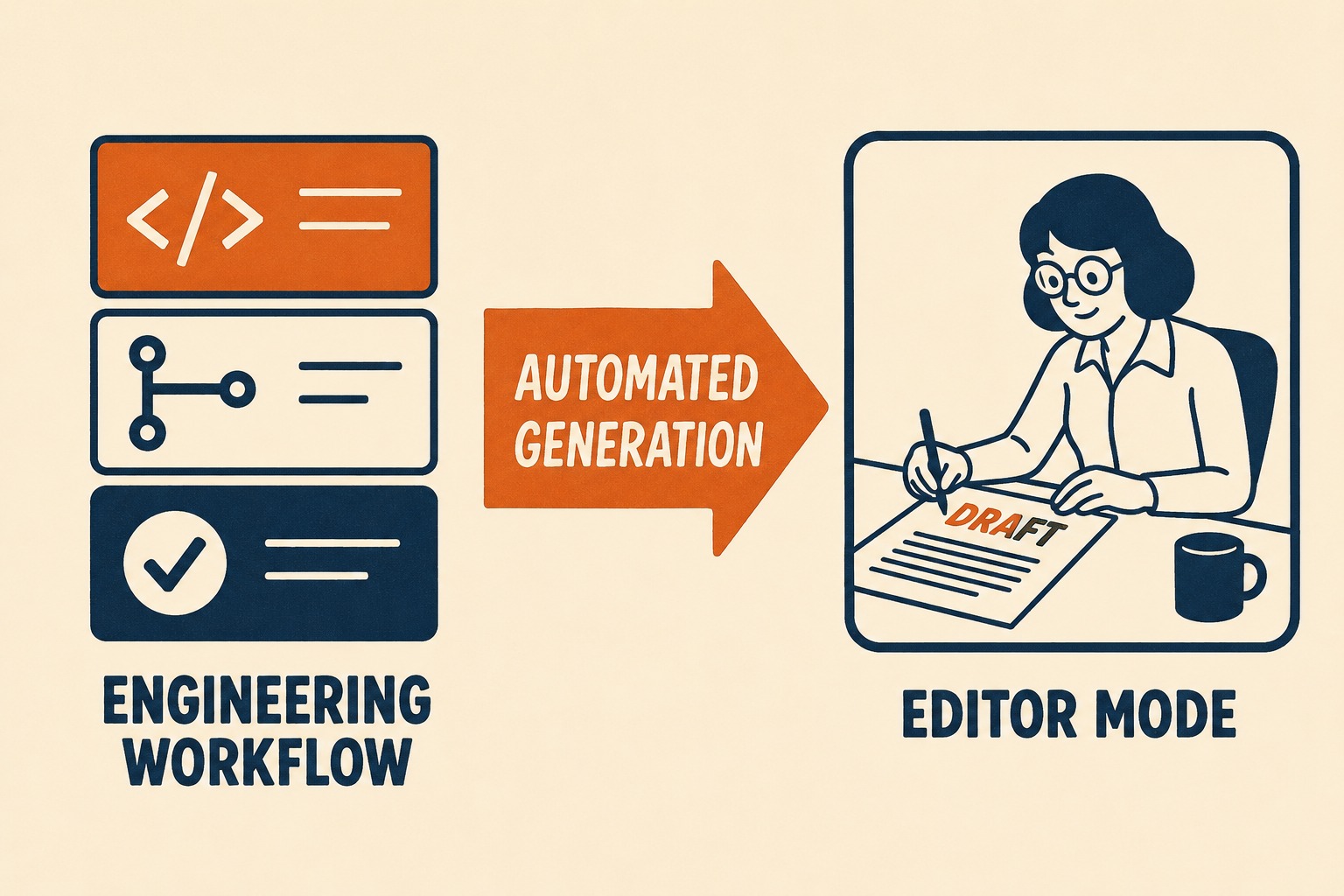
The system they're using generates release notes, API documentation, and changelogs from the engineering workflow itself. Doc Holiday is built for exactly this use case. It gives the technical writer a structured environment to validate, edit, and publish without starting from a blank page every release.
Faster documentation means fewer support escalations, better user communication, and less engineering time spent explaining what shipped. The right infrastructure makes that possible without eliminating the human judgment that keeps documentation accurate.