How Coding Agents Change the Role of the Technical Writer


The engineering team just shipped more code in the last quarter than in the previous two combined. GitHub Copilot, Cursor, and a handful of other tools are in the stack now. Pull requests are up 10.6%. Cycle time is down by hours. Task completion rates are jumping by 26% in some studies. Leadership is thrilled.
Three weeks later, someone notices the API reference is three releases behind.
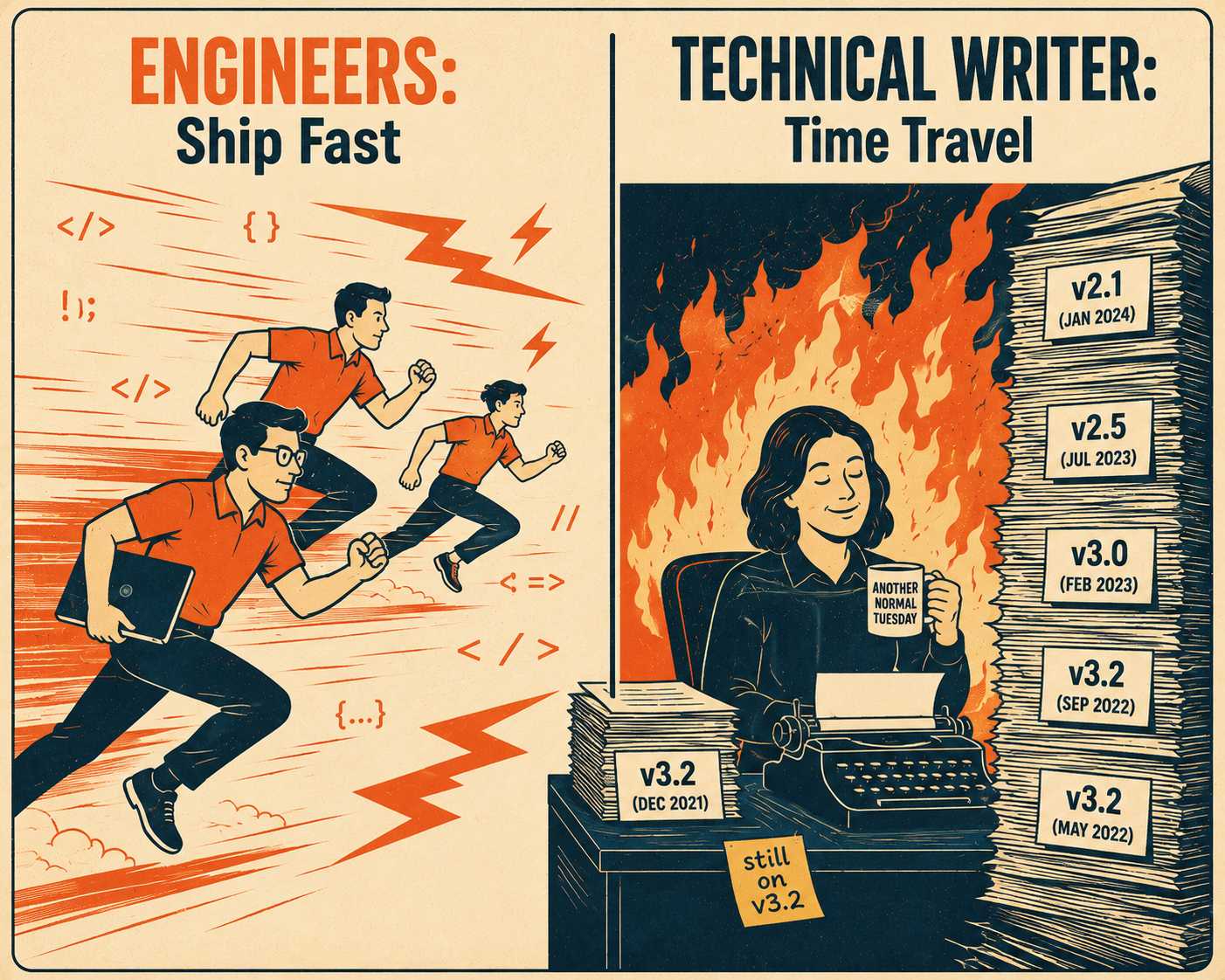
That is the situation coding agents create for documentation teams. The engineering side of the house moves faster. The documentation side, still running a manual write-review-publish cycle, does not. The gap widens. Support tickets rise. New users get lost. The docs describe a version of the product that no longer exists.
Coding agents change the role of the technical writer by making the old model structurally unworkable. Writers who adapt to that shift become more valuable. Writers who do not will find the role increasingly difficult to defend.
The Velocity Trap
The documentation process most companies use was designed for a different era. It assumes that releases are infrequent enough that a writer can finish one set of docs before the next feature ships.
Elite-performing teams now deploy on demand, often multiple times per day. The 2023 Accelerate State of DevOps Report found that high-quality documentation leads to 25% higher team performance, which makes the irony particularly sharp: the teams moving fastest are the ones whose documentation processes are most likely to fall apart.
When a team is shipping code daily, a manual write-review-publish cycle is already behind before it starts. Documentation debt accumulates when content changes more slowly than the products it describes. It creates support costs, frustrates customers, and increases operational risk.
Coding agents accelerate this dynamic considerably. A repository adopting agentic tools can see substantial short-term velocity gains. More code, more PRs, more features, more API surface changes. All of it needs documentation. None of it waits.
You cannot fix this by asking writers to type faster.
What Agents Actually Write
It is tempting to think that because AI can write code, it can also write the documentation. This is partially true, and the partial truth is the problem.
Coding agents are genuinely good at generating inline comments, docstrings, and function-level annotations. They understand syntax and structure. They handle repetitive, well-defined tasks exceptionally well. For a codebase with hundreds of undocumented functions, an agent can produce a solid first pass in minutes rather than weeks.
What they cannot do is explain why.
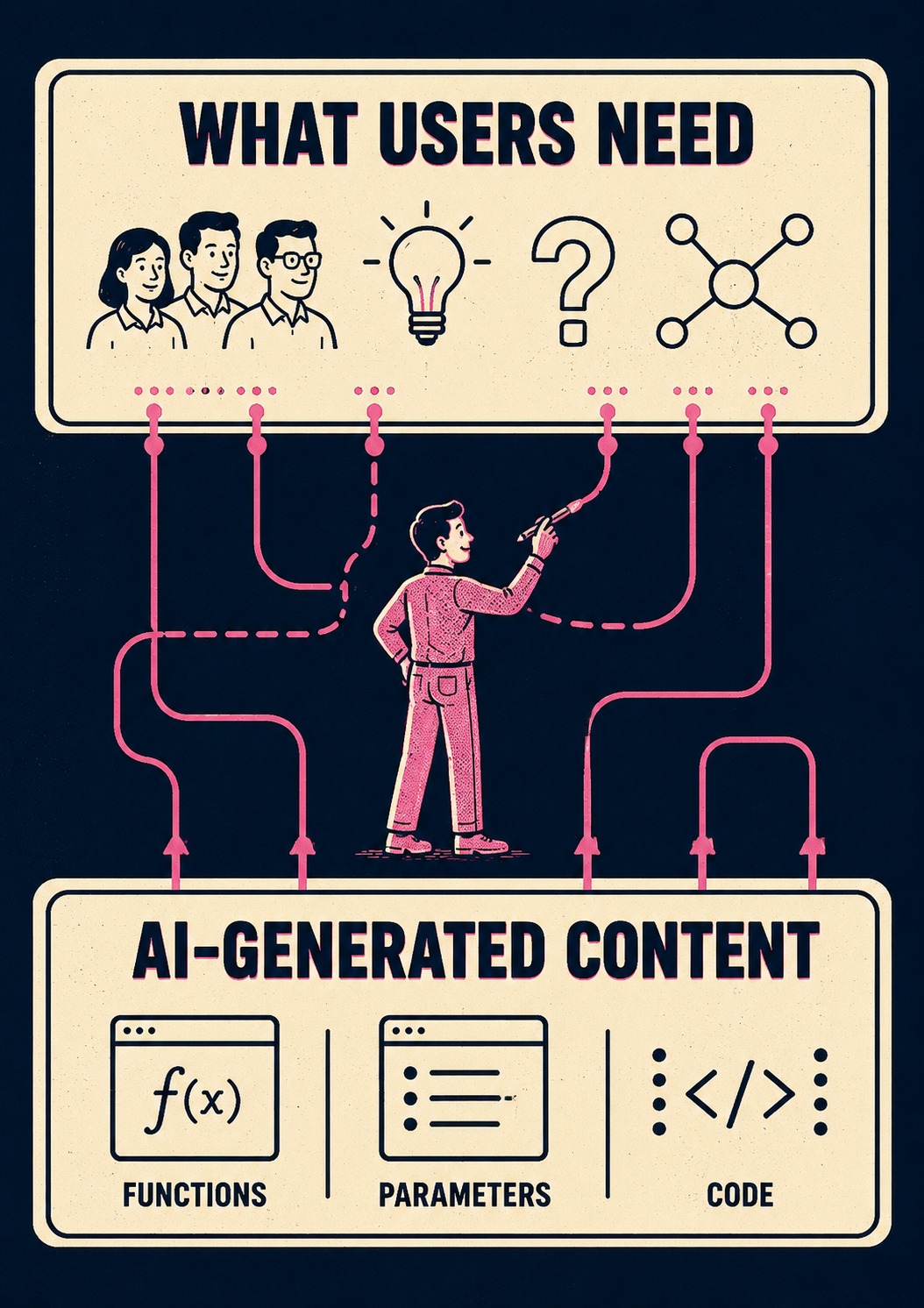
They document code in isolation, lacking the historical and strategic context needed to explain why a particular pattern was chosen, what alternatives were considered, or how different modules depend on one another. They do not know which edge cases matter to your users. They do not know what a new developer needs to understand on their first day. They produce technically accurate code-level notes, not conceptual guides, tutorials, or onboarding paths.
That gap does not close automatically. It closes when a skilled writer closes it.
The New Job Description
When coding velocity increases, technical writers cannot keep pace by writing faster. They need to manage systems that generate drafts from engineering artifacts, and then validate, structure, and publish that output.
The best technical writers become documentation architects.
They design the templates, taxonomies, and validation frameworks that turn raw engineering signals into coherent user-facing content. They govern what gets published. They ensure consistency across releases. They catch the edge cases that automated systems miss. A skilled writer reviewing AI-generated output focuses on the connective tissue: cross-references, examples, narrative coherence, the things agents tend to miss.
They do not write every sentence. They make sure every sentence that ships is correct, useful, and aligned with product strategy.
Writers who can prompt, validate, and structure AI output become force multipliers. Writers who insist on manual drafting as the only legitimate work will struggle, and not because the work is less valuable, but because the volume of releases will simply outpace them.
The Headcount Question
Companies adopting coding agents often look at their technical writing budget and ask whether they need the same headcount. Some will reduce team size. Others will reallocate roles. The transformation is real, and it is worth being direct about it.
The right move is to elevate the strongest writers into system management roles and reduce reliance on junior drafters who primarily reformatted engineering notes. Top writers, those who understand product strategy, user intent, and cross-functional workflows, are more valuable in an AI-augmented environment. They become the validators, the governors, the people who ensure AI-generated drafts do not ship with gaps, inconsistencies, or misleading framing.
Junior writers and contractors hired primarily for volume output face a harder path. Organizations that previously needed five writers to keep up with release velocity may find they need two strong writers managing AI systems instead. That is a real shift, and treating it with false optimism does not help anyone plan for it.
The teams adapting well are not trying to manually keep up with automated engineering. They are changing the system. They are building documentation workflows that connect directly to the engineering artifacts where decisions are already being recorded, generating first drafts automatically, and routing them to skilled writers for validation and publication.
Doc Holiday is built for exactly this workflow. It generates release notes, changelogs, and API references from pull requests and commits, giving writers a validated first draft rather than a blank page. A writer reviews the output, handles edge cases, and ensures the published content reflects what users actually need. The generation happens in lockstep with the release. The writer is not starting from scratch; they are governing a system that already has the right context.