How to Write Release Notes Engineers Will Actually Respect


If you want to understand the exact moment an engineering team stops trusting its own product organization, look at the release notes.
A senior engineer spends three days tracking down a subtle bug in a staging environment. The bug is caused by a change in how an internal API handles null values. When they finally isolate the issue and check the release notes for that specific deployment, they find a single bullet point: "Various backend improvements for a better user experience."
The engineer asks the product manager why the API change wasn't documented. The product manager admits that marketing wrote the release notes by summarizing Jira ticket titles, and they didn't really understand the database migration.
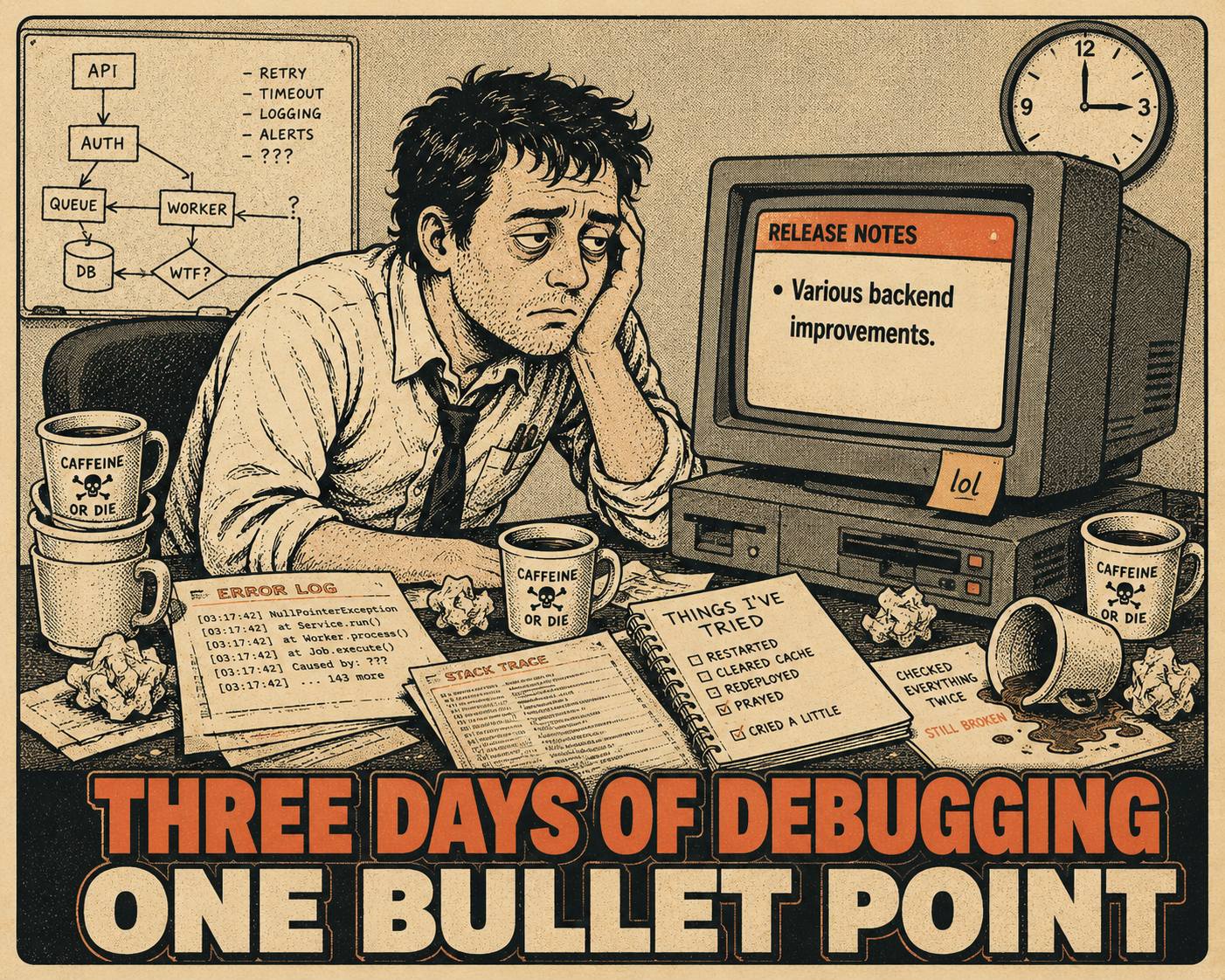
From that day forward, the engineer never reads the release notes again. They just read the commit history.
It is a familiar cycle. We keep treating release notes as a marketing chore, and we keep wondering why engineers refuse to engage with them.
When release notes are bad, engineers feel misrepresented. Their complex, nuanced work is reduced to vague marketing copy that makes it sound trivial. But when release notes are good, something strange happens. Engineers share them voluntarily. They link to them in support threads. They feel a sense of pride that their work is being communicated accurately.
Why Nobody Reads the Changelog Anymore
The problem with most release notes is that they are written by people who were not in the room when the decisions were made.
They are reconstructed after the fact, often by someone staring at a list of closed tickets, trying to guess what actually happened. The result is documentation that oversimplifies to the point of uselessness.
When technical details are stripped out in the name of being "user-friendly," the people who actually need to understand the system are left in the dark. It is a disservice to the users, who no longer understand what the updated software will actually do.
It is also a profound morale issue for the engineering team. Engineers care deeply about technical accuracy. When their work is summarized as "bug fixes and performance improvements," it erases the effort and the tradeoffs involved in the work. It signals that the organization does not actually value the technical reality of what was built.
The Things Engineers Actually Respect
Engineers do not need release notes to be entertaining. They need them to be true.
They respect technical accuracy. They respect a clear explanation of why a decision was made, not just what the decision was. They respect specificity about what changed, and just as importantly, what did not change.
They respect honesty about limitations. If a new feature has a known issue with large datasets, saying so in the release notes builds credibility. Pretending it works perfectly destroys it.
This does not mean release notes should be an unedited dump of the git log. Commit logs are full of noise, merge commits, and obscure titles. Good release notes require translation. But the translation must be contextually aware. The writer must understand the problem that was being solved.
It requires writing for human impact while maintaining technical truth.
Moving the Writing Closer to the Work
The best release notes are not written days later by someone reconstructing events. They are written close to the work.
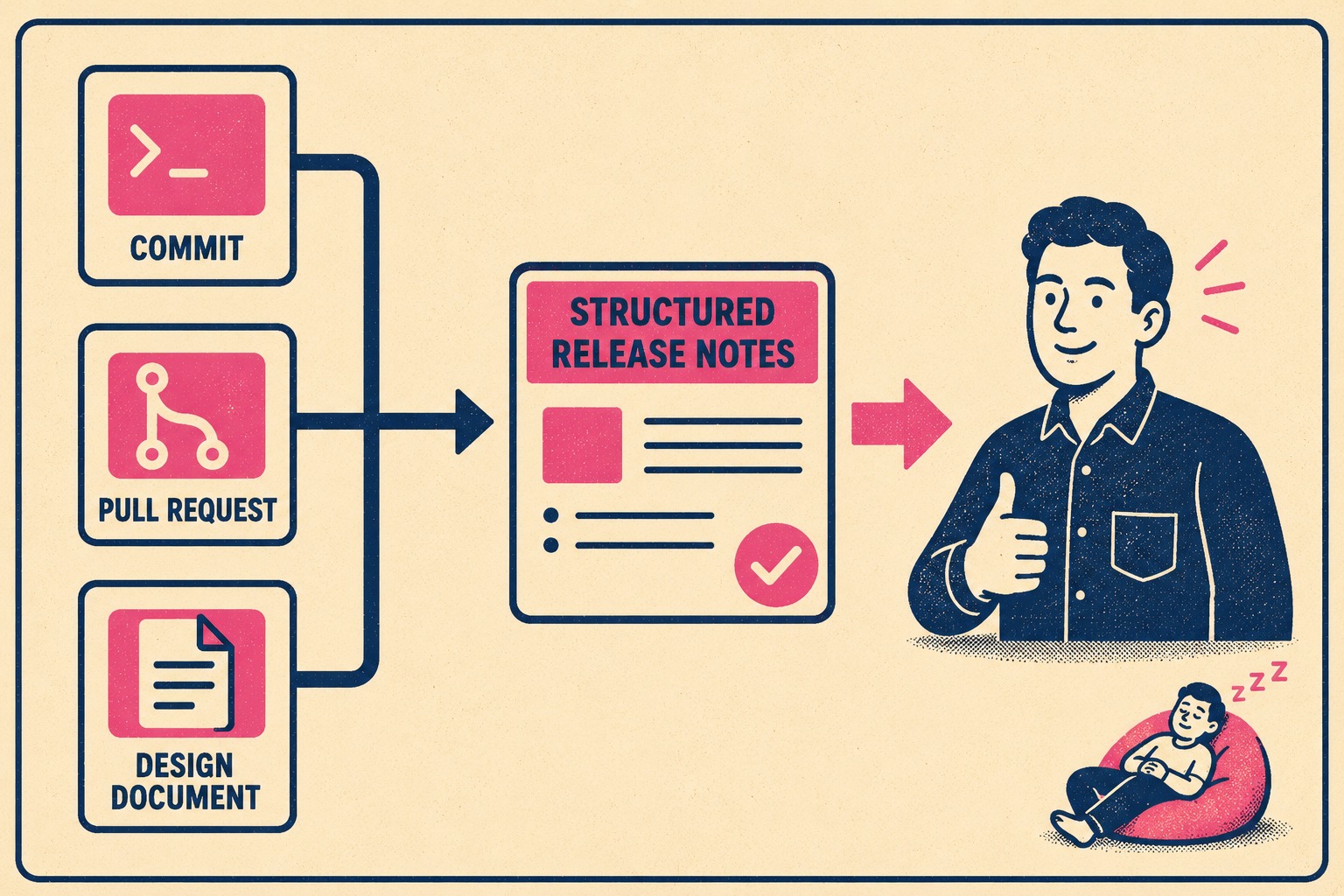
They are assembled from material the engineers are already producing. Structured commit messages, detailed pull request descriptions, and excerpts from design docs. When teams adopt conventions like Conventional Commits, they create a structured history that makes generating accurate release notes possible.
This is where the workflow has to change. You cannot bolt good documentation onto the end of a sprint. It has to be part of the development process itself.
When the raw material for the release notes comes directly from the pull requests, the output is grounded in what was actually built.
The Validation Layer
Having an engineer review a draft of the release notes is not about approval theater.
It is about catching misrepresentations before they go public. It is about ensuring that the tradeoffs are framed correctly. Engineers should feel ownership over how their work is described to the world.
But this validation step is where many teams get stuck. They simply do not have the capacity to manually draft, review, and rewrite release notes this way at scale. This is especially true after headcount reductions, when the people who used to manage this process are no longer there.
The raw material is sitting right there in the repositories. The pull requests, the commits, the issue discussions. It just needs to be extracted, structured, and validated.
This is the operational reality that Doc Holiday is built for. It is a documentation engine that generates release notes directly from engineering workflows, using AI to draft the initial output from commits and PRs. It provides the structure for a technical writer or engineering lead to validate and refine that output in a dashboard, flagging edge cases and feeding patterns back into the system. It gives lean teams a way to produce release notes that engineers are actually willing to link to, without having to rebuild a massive documentation headcount.