How to Fix Your Enterprise Release Notes Process


Someone in leadership has decided your release notes are a problem. They haven't told you exactly what's wrong with them, or what good would look like, or who owns the fix. They've just made it clear the current situation isn't working.
That's the actual starting point for most release notes overhauls at enterprise SaaS companies. Not a blank-slate redesign. A mandate with no budget and no headcount, handed to whoever seemed most likely to care.
The reason this keeps happening is that enterprise release notes are genuinely harder than they look, and most organizations don't have a process built for that complexity. They have a habit: someone writes something before each release, it goes through a few rounds of edits, and it ships. That's not a process. It's controlled chaos that happens to produce output.
Here's what a real process looks like, and why the current one keeps breaking.
Why Enterprise Release Notes Are a Different Animal
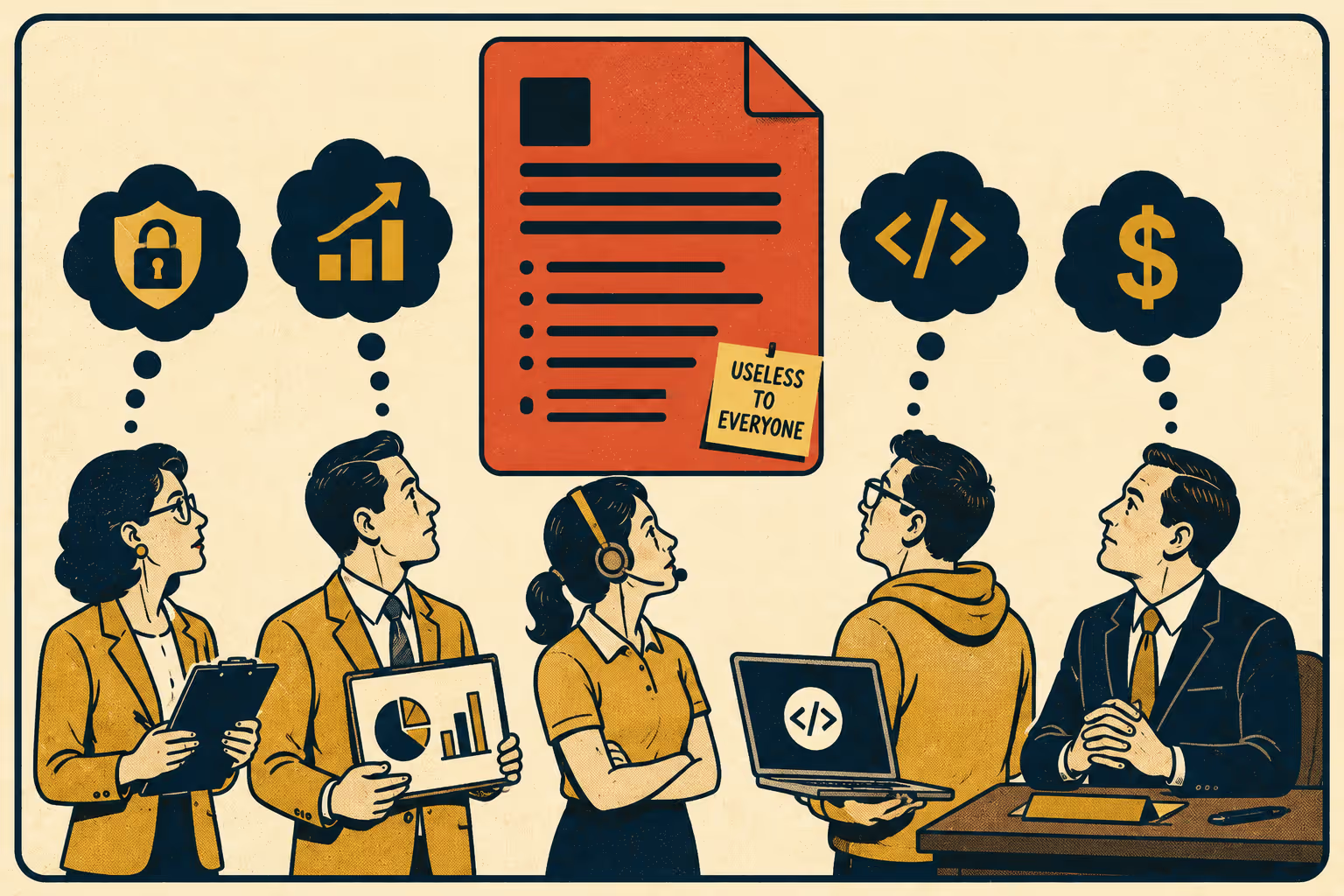
Consumer apps have one audience. Enterprise SaaS has five.
Compliance officers need to know about security patches and changes to data handling. They're not reading for product excitement; they're reading to satisfy audit requirements. Under SOC 2's CC2 communication guidelines, companies are required to notify customers of changes in functionality, new or removed features, and warnings about risks. A vague "performance improvements" entry doesn't satisfy that.
Customer success teams need talking points. When a renewal conversation is coming up, they need to be able to say: here's what shipped in the last quarter and here's why it matters to your use case. They can't do that from a changelog full of internal ticket references.
Support needs troubleshooting context. When a change breaks something for a customer, the support team needs to know what changed, when, and what the expected behavior is. Without that, they're guessing.
Technical users need migration paths. API changes, deprecations, and schema modifications require specific documentation that tells developers what they need to update and by when. A 2016 research study on audience-specific release note generation found that different target audiences have fundamentally different information needs from the same release, and that a single document cannot serve all of them well.
A single "what's new" post can't serve all of these audiences. The compliance officer doesn't care about the new dashboard feature. The developer doesn't need the renewal talking point. Writing one document for everyone produces a document that's genuinely useful to no one.
The answer is audience-specific output. Which means the process has to generate multiple versions of the same release, not one version that tries to cover everything.
The Information is Already There, Mostly
The frustrating thing about enterprise release notes is that most of the information required to write them already exists. It's in the commit history. It's in the pull request descriptions. It's in the linked Jira tickets. Engineers are already producing the raw material; the problem is that nobody has built a system to extract it.
Research on what practitioners expect from release notes found that the ideal content draws on issues (29%), pull requests (32%), and commits (19%). That's almost entirely version control data. The information is there; it just requires someone to read two weeks of merged PRs and translate them into something a customer success manager can use.
That translation step is where the process breaks down. It requires someone to stop what they're doing, understand the technical context of each change, and rewrite it for a non-technical audience. Documentation tasks already consume roughly 11% of developers' work hours. When that work is unstructured and last-minute, it's also low-quality. A 2022 study analyzing over 1,900 GitHub releases found that 37% of release notes were simply empty, which is the honest endpoint of a process that treats documentation as an afterthought.
The fix is to treat the version control system as a structured data source rather than a log to be manually read. That means enforcing PR hygiene: descriptive titles, linked issue references, labels that distinguish features from bug fixes from breaking changes. It means requiring a "user impact" field in the PR template so that the person writing release notes has something to work with beyond the technical description of what changed.
It also means using automation to do the extraction. AI-powered generation tools that ingest commit history, PR descriptions, and ticketing metadata can produce structured first drafts that a technical lead reviews rather than writes from scratch. The quality of the output depends on the quality of the input, which is why the PR hygiene step comes first. Garbage in, garbage out, as they say (though in this case it's more like "vague PR title in, vague release note out").
The goal of this step is to change what the human reviewer is doing. Instead of assembling the draft, they're editing it. That's a fundamentally different job, and it's one that takes a fraction of the time.
Who Reviews This, and Why That Question is Harder Than It Sounds
Most release notes review processes fail because they're designed around organizational hierarchy rather than information accuracy.
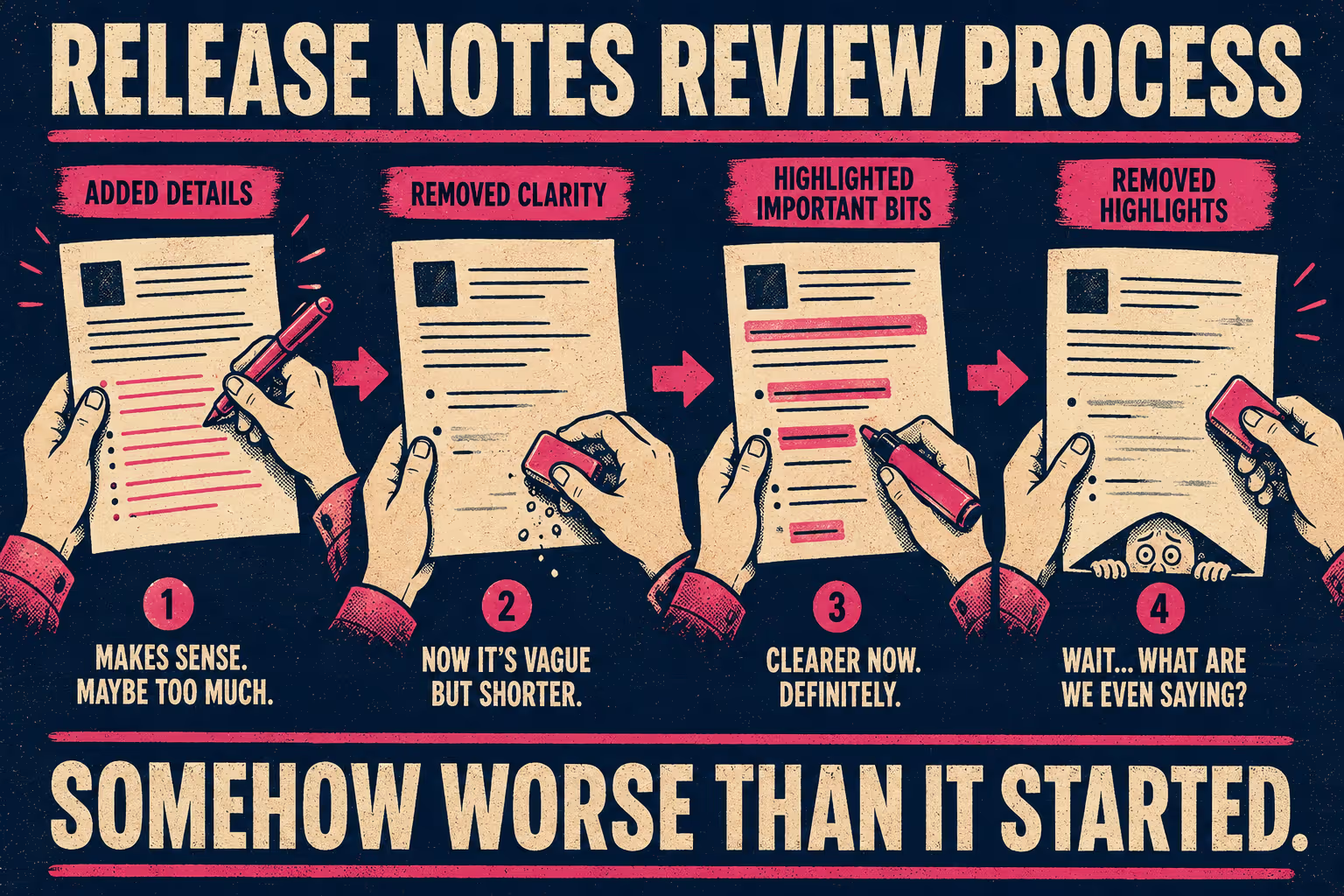
The typical flow: the draft goes to product management, who edits for tone. Then to engineering leadership, who edits for technical accuracy. Then to legal, who adds disclaimers. Then to marketing, who removes the disclaimers and adds excitement. By the time the notes ship, they've been edited in four conflicting directions and nobody is fully satisfied with them.
The problem isn't that too many people are reviewing. The problem is that too many people are editing, and they're editing for different goals.
A better model separates the review into two distinct roles. One technical reviewer, usually an engineering lead or senior technical writer, owns accuracy. They're the person who can verify that the API change description is correct and that the migration path is complete. They have final say on technical claims.
A second reviewer, usually a product manager or customer success lead, owns audience fit. They're checking whether the customer-facing language actually communicates value, not whether the technical details are right.
These two reviews can happen in parallel. They don't need to be sequential, and they don't need to produce a single unified document that satisfies both reviewers simultaneously, because the technical audience and the customer success audience are reading different versions anyway.
The practical implementation of this is risk-based triage. Minor bug fixes don't need the same review process as breaking API changes. A patch that fixes a UI rendering issue in one browser can ship with a quick PM sign-off. A deprecation that requires customers to update their integrations needs engineering sign-off, a migration guide, and advance notice. ITIL's change management framework distinguishes between standard, normal, and emergency changes precisely because not all changes carry the same risk, and treating them identically is what creates bureaucratic bottlenecks.
Build the review process around the risk level of the change, not the organizational chart. It's faster, and it produces better output.
The underlying problem in all of this is the same: someone has to extract accurate information from engineering and route it to the right audiences without spending the entire week before a release doing it. Doc Holiday generates audience-specific release notes directly from Git commits, PR descriptions, and ticketing metadata, then provides a structured review workflow so a single technical owner can validate output quality without rebuilding the content from scratch. The extraction and drafting work happens automatically. The reviewer focuses on accuracy and stakeholder alignment, which is the part that actually requires human judgment.