How to Build a Documentation Culture in an Engineering Team


Your runbook says the deployment pipeline requires a manual approval gate in Jenkins. That gate was removed eight months ago when you migrated to GitHub Actions. A new engineer follows the runbook during an incident at 2 a.m., burns forty minutes looking for a Jenkins job that doesn’t exist, and the outage window doubles. Nobody updated the page after the migration ticket closed. Nobody even knew the page existed.
That is the stale documentation problem in engineering. It is not a writing problem. It is a process problem.
Writing documentation feels like a tax on shipping. Reading it later feels like a gift from the past. The person writing pays the cost. Someone else gets the benefit. That misalignment is why culture initiatives fail. They ask engineers to do invisible work that doesn't show up in performance reviews or sprint velocity. The 2023 Google Cloud DORA report found that high-quality documentation leads to a 25% increase in team performance, but individual incentives rarely align with that reality.
You don't need people to love documentation. You need it to be low-friction enough that they do it anyway. Culture is what happens when the path of least resistance is also the right thing to do.
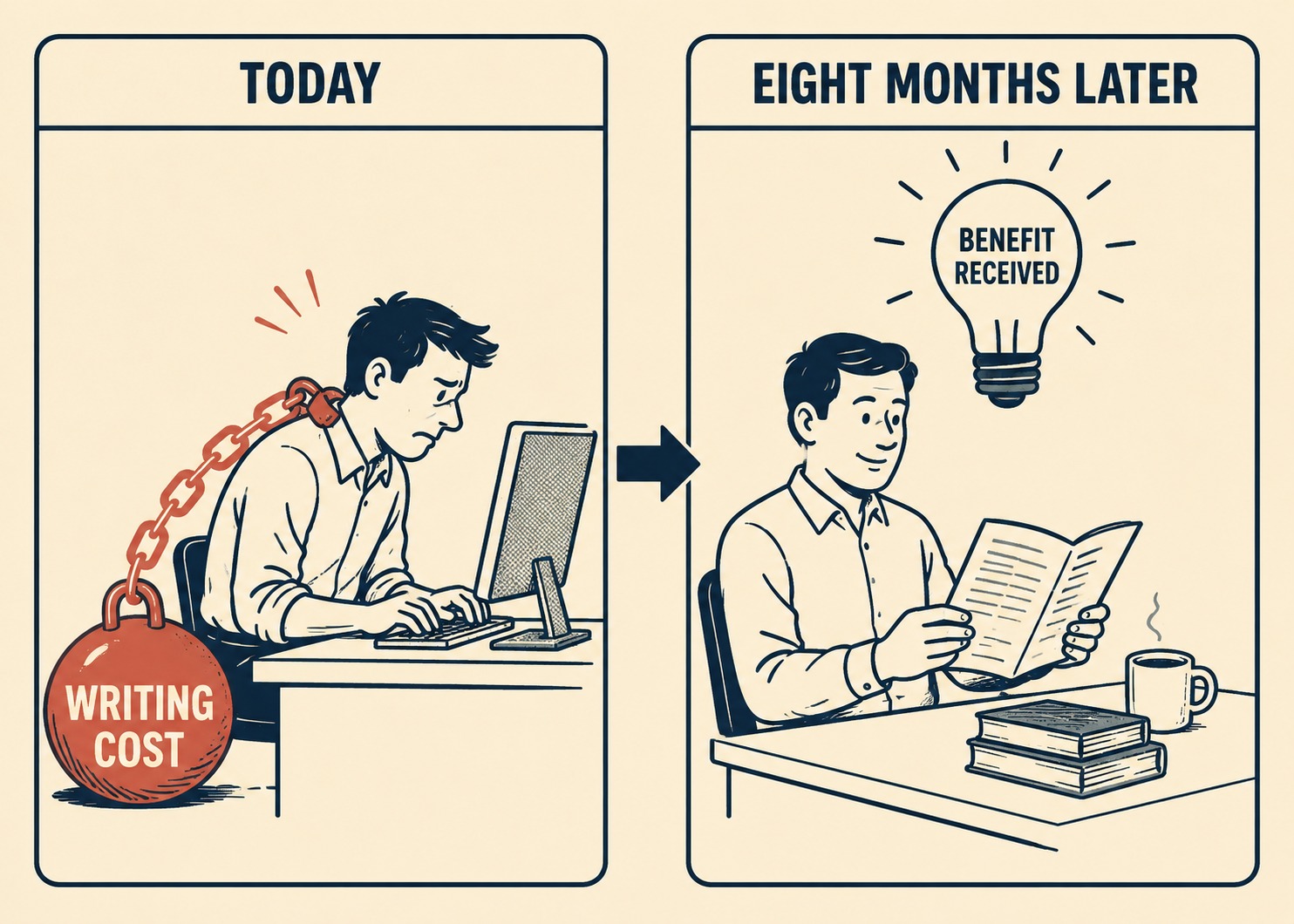
The Tax on Shipping
Engineers already write commit messages, pull request descriptions, issue comments, and Slack threads. The best documentation systems harvest that work. They don't duplicate it.
Embed documentation into existing workflows. Proximity to the work matters. Context is highest when the code is fresh. If an engineer has to switch contexts to a completely different tool to write down what they just did, they won't do it.
Tooling that generates scaffolding or templates from existing engineering artifacts helps. The engineer fills in blanks rather than starting from zero. If no one builds what you use, then what’s the point? Documentation fosters adoption of what you build.
The Infrastructure of Memory
Make documentation addressable and searchable. A 40-page Google Doc no one can find is worse than nothing. It creates false confidence.
Documentation culture requires infrastructure. Consistent taxonomy. Reliable search. Clear ownership per doc or domain. Engineers won't document if they assume their work will be buried or unmaintained. A centralized, searchable index is critical, even if the underlying documentation lives in different repositories or formats.
Tying It to the Work
Tie documentation to outcomes people care about. If the only time a missing doc is noticed is during an incident postmortem or customer escalation, that's too late.
Surface documentation gaps during planning, architecture review, or onboarding new engineers. If a senior engineer has to re-explain the same system three times in two weeks, that's the moment to write it down. The person asking should draft it, with review from the person who explained it.
The View from the Top
Model the behavior at the top. If leadership doesn't document decisions, no one else will.
This isn't about the VP writing API docs. It's about documenting why decisions were made, especially the non-obvious ones. Architecture decision records (ADRs), lightweight RFCs, and design docs written by senior engineers signal that documentation is respected work. They provide a shared reference point and reduce ambiguity.
The Maintenance Problem
Stale docs are worse than no docs because they erode trust in the entire corpus. Engineers at companies with poor documentation take an average of 3.2 months to reach full productivity, versus 1.4 months at companies with well-maintained docs — nearly two months of salary and opportunity cost per hire.
Assign clear ownership. Every document has a directly responsible individual (DRI). Build lightweight review cycles. Flag docs older than six months for a quick accuracy check. Automate what you can. Dead links, deprecated API references, file structure drift.
Force Multipliers, Not Bottlenecks
If you have technical writers, position them as force multipliers.
Writers shouldn't be responsible for knowing what to document. Engineers are. Writers provide structure, review, and polish. In lean teams, this might mean a senior engineer or tech lead takes on the coordination role part-time. The key is someone who treats the documentation corpus as a system, not a collection of one-off tasks.
A Ninety-Day Pilot
Week 1–2: audit what exists and identify critical gaps.
Week 3–4: establish lightweight templates and ownership model.
Week 5–8: run a pilot with one team. Embed documentation checkpoints in their existing sprint process and measure whether it sticks.
Week 9–12: expand to other teams with adjustments based on what worked.
The operational challenge isn't just getting engineers to write. It's ensuring the output is structured, maintained, and connected to the work that's actually shipping. Doc Holiday generates release notes, changelogs, and API documentation directly from engineering workflows, so teams aren't starting from a blank page. It gives lean teams the structure to validate and scale documentation output without requiring writers on every commit. When documentation is automatic by default and human oversight is focused on edge cases and clarity, culture becomes easier to sustain. The baseline work is already done.