The High-Stakes Hire Your Engineering Team is Getting Wrong


Your team just closed a major enterprise customer. The sales team is celebrating in Slack. The product team is already planning the next roadmap. Then the customer tries to actually use the product.
They stall out on day one. The authentication flow changed three times in the last two sprints, and the only person who knows how the new tokens work is a senior backend engineer who is currently hiking in the Cascades. Support routes the ticket to engineering. Engineering groans. The onboarding timeline slips by a week.
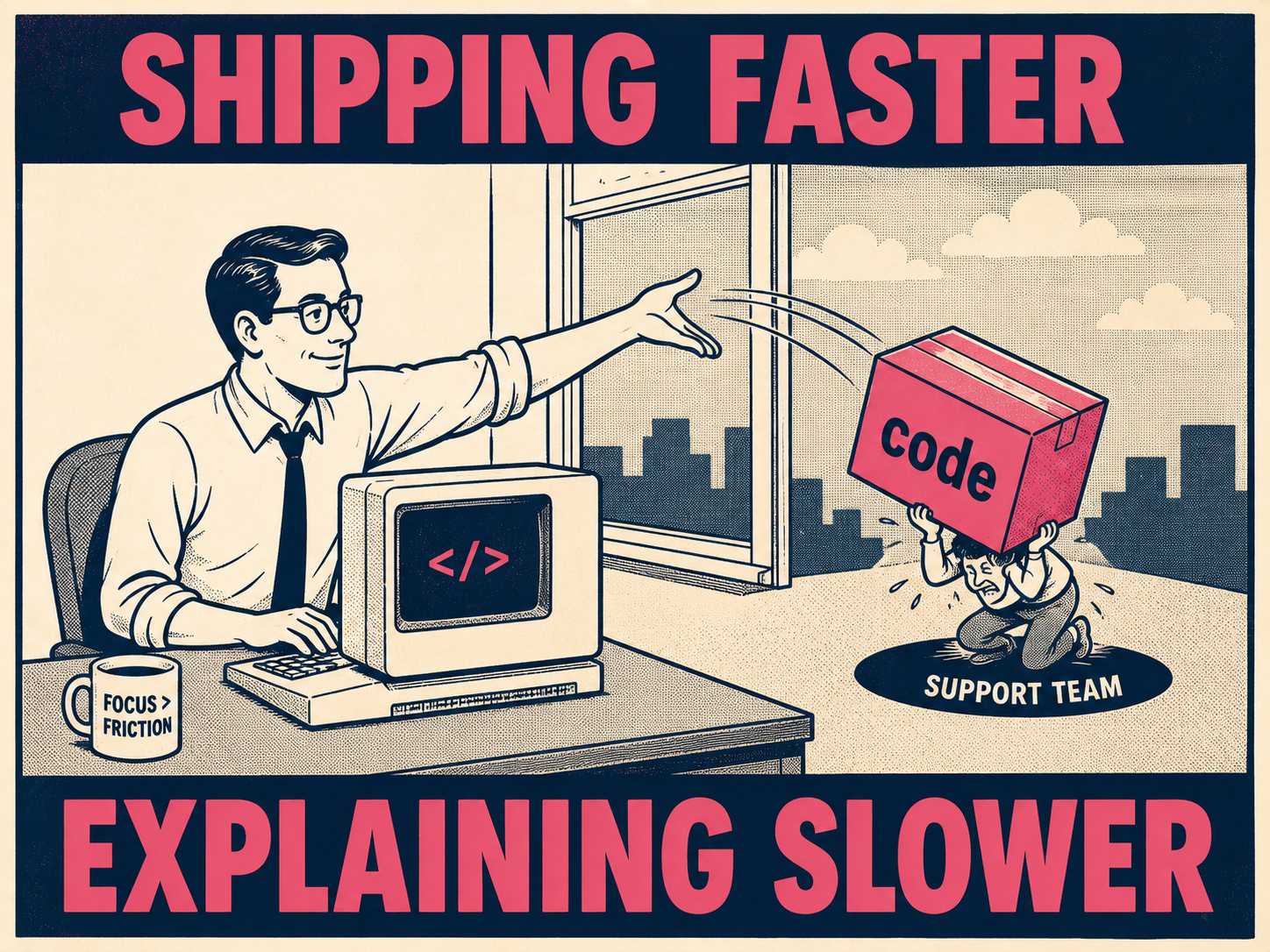
You look at the Jira board and realize a quiet truth. Your team isn't shipping faster. They are just deferring the cost of explaining what they shipped. The velocity is an illusion, paid for with a documentation debt that is compounding daily.
So you decide to fix it. You get budget approval. You tell the recruiter to find a technical writer.
And this is exactly where things go off the rails.
"We Need Better Docs" Is a Diagnosis, Not a Job Description
When engineering leaders recognize the documentation gap, they tend to assume the solution is simply adding a person who types well. They conflate the symptom with the role.
But what you actually need right now is not someone to write more content. You need someone to audit the wreckage, establish a sustainable workflow, and build a repeatable process.
If you hire a writer who excels at polishing end-user guides, and drop them into a team that desperately needs API reference architecture, they will fail. If you hire someone who thrives in the structured environment of a mature documentation system, and ask them to build one from scratch while engineers ignore their Slack messages, they will quit.
You have to decide what game you are playing. Are you hiring for documentation debt cleanup? Ongoing maintenance? Net-new documentation for a growing product surface?
There are different archetypes here. There is the structured writer who wants clear templates and workflows. There is the investigative writer who can reverse-engineer undocumented features by reading the codebase. There is the strategic writer who shapes information architecture. And increasingly, there is the writer who manages and validates AI-generated output at scale.
Pick the one that matches your actual problem.
What You Are Actually Paying For
Technical writers at the senior level command salaries comparable to mid-level engineers. The median compensation hovers around $120,000, with senior roles in major tech hubs pushing well past $150,000.
Many engineering managers are surprised by this. They shouldn't be.
Strong technical writers are rare. The role requires a very specific, contradictory skill set: deep technical fluency combined with high-level communication expertise. They have to understand the architecture well enough to know why the API behaves the way it does, but retain enough beginner's mind to explain it to someone who has never seen it before.
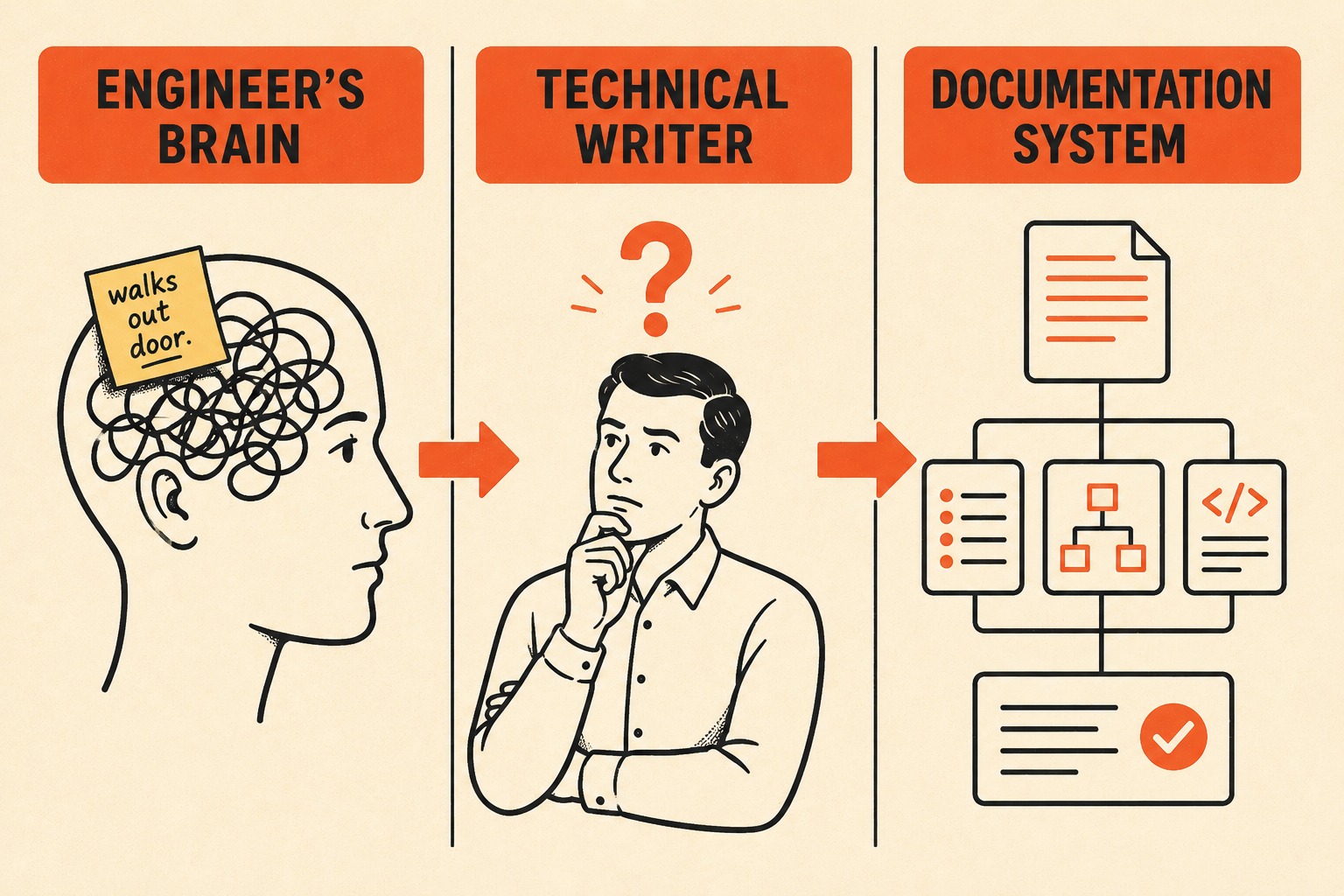
They do this repeatedly, across products and teams, learning complex domains faster than anyone else in the building. You are not paying for typing. You are paying for the ability to extract institutional knowledge from the heads of your engineers and turn it into an asset that scales.
If your needs are truly limited—a few release notes a month and some basic API endpoints—you might not need a full-time senior hire. A contractor might make sense. But if you have complex workflows, multiple audiences, and institutional knowledge that walks out the door every time an engineer leaves, you need a professional.
The Interview You Are Not Qualified to Conduct
The core uncertainty for an engineering manager hiring a writer is simple. You know you need help, but you don't know what "good" looks like.
You cannot evaluate a technical writer the way you evaluate a developer. LeetCode won't help you here.
Instead, test for the actual job. Ask them to document a feature you just described to them verbally. Give them a poorly structured internal wiki page and ask them how they would fix it. Have them critique your existing documentation.
What separates adequate from excellent is not vocabulary. It is structural coherence. It is the ability to target the appropriate audience. It is the instinct to ask the right questions to validate technical accuracy, even when they are not the subject matter expert.
A good technical writer will push back on your prompt. They will ask who the audience is. They will ask what the user is trying to achieve before they start writing steps.
The First 90 Days Are Not for Writing
A technical writer walking into a team with no documentation culture, no templates, no defined workflows, and no engineering buy-in will fail. It does not matter how good they are.
You have to prepare the ground.
Establish where the documentation lives. Get engineering leadership to publicly endorse the function. Build time into sprint planning for engineers to actually collaborate with the writer.
If your infrastructure is weak, you need to accept a hard reality. The writer's first 90 days will be organizational, not productive output. They will be setting up tooling, defining style guides, and figuring out who actually knows how the system works.
If you demand a mountain of published content in month one, you are forcing them to build a house on sand.
The Automation Question
We have to talk about the elephant in the room. Should you hire a writer at all, or should you just invest in tooling and have engineers handle it?
If your team is under 20 people, and your documentation needs are strictly limited to API references generated from code comments, automation might be the better path.
But if you have complex end-user workflows, you need a human who can think strategically about information architecture.
The right technical writer doesn't just write. They build systems. They create templates that engineers can fill in. They establish workflows that catch documentation gaps before release.
In teams adopting AI-generated documentation, the writer becomes the validation layer. Without human oversight, AI can hallucinate and drift from architectural reality. With it, AI scales.
This is where the leverage is. A technical writer spending 100% of their time producing content is a bottleneck. A technical writer spending their time designing workflows, establishing standards, and validating output is an engine.
If you want to build that engine without rebuilding a massive headcount, you need a system that captures documentation directly from engineering workflows. That is what Doc Holiday does. It generates first drafts from code commits and pull requests, giving your technical writer the structure to review for accuracy in a dashboard, flag edge cases, and feed patterns back into the system. It turns your first documentation hire from a solo typist into a scalable quality control function.