How Should Engineering Teams Document Backwards-Compatible API Changes?


If you run a popular API, someone is going to ask you for a small favor. They need to add a new filtering option to the /users endpoint. It will be an optional query parameter. If a client doesn't send it, the API behaves exactly as it always has.
This is the definition of a backwards-compatible change. It breaks nothing. It requires no immediate action from your consumers.
Because it breaks nothing, it gets documented exactly the way harmless things get documented: lightly, if at all. Maybe there is a one-line bullet in the changelog. Maybe the OpenAPI spec gets updated with a new optional field. Maybe someone adds a @Deprecated annotation to the old method signature and calls it a day.
But what the changelog doesn't say is that this new parameter is actually the first step in a major architectural shift. In eighteen months, the old way of filtering will be removed entirely. The optional parameter will become mandatory.
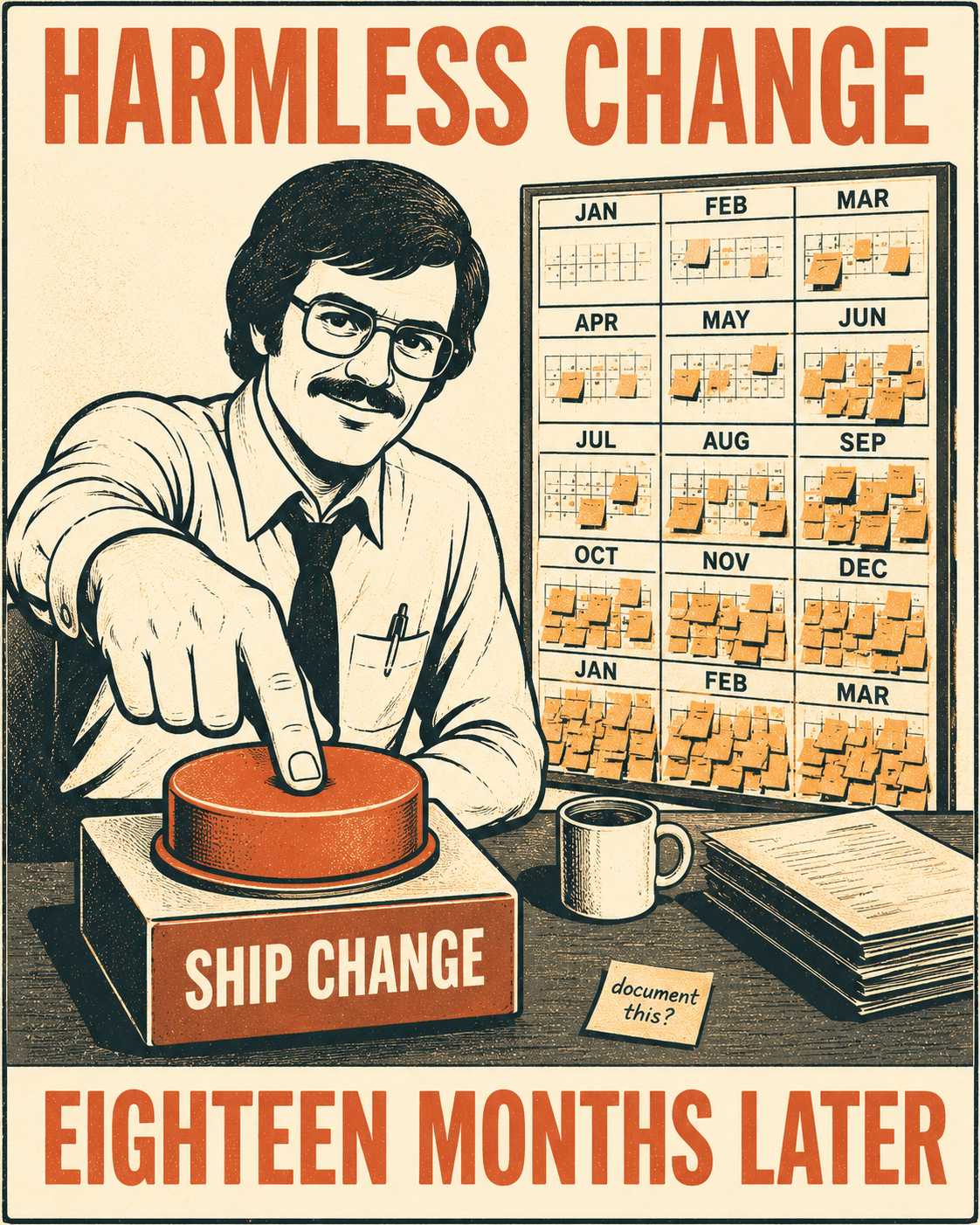
This is how backwards-compatible changes become technical debt. They feel safe to ship, so teams assume consumers will naturally migrate over time. But consumers don't migrate unless they are told to. They just keep using the old patterns until the next major version arrives and the "harmless" changes suddenly become a migration nightmare. Research on Java library migrations confirms this pattern: developers frequently rely on migration guides during version updates, yet only about 28% of libraries that introduce breaking changes actually provide them.
Documenting backwards-compatible changes isn't about satisfying a technical definition of compatibility. It is about communicating intent. It is about telling your consumers what they should do about the change, not just what the change is.
The Day It Ships
When a compatible change goes live, the documentation needs to do three things immediately.
First, it needs to explicitly state the deprecation timeline for the old pattern. If a new parameter replaces an old one, the old one is deprecated the moment the new one ships. The removal date needs to be in the release notes, not buried in an internal roadmap.
Do not rely on inline code comments. An @Deprecated annotation in your codebase does not help a consumer who only interacts with your REST endpoints. A large-scale analysis of Java systems found that 64% of API elements are deprecated with replacement messages, but there is almost no major effort to improve those messages over time. The deprecation notice must live where the consumer lives: in the API reference, in the release notes, and in the developer portal.
Second, it needs to provide a concrete migration path. Telling a consumer that a field is deprecated is useless if you don't tell them what to use instead. The documentation must map the old pattern to the new pattern. It must explain why the change was made, whether for performance, security, or a broader architectural shift. Consumers are much more likely to prioritize a migration if they understand the value it brings them. The Bump.sh guide on API deprecation puts it plainly: don't leave API consumers guessing. Explain the rationale.
Third, it needs to make the versioning contract explicit. Whether you use semantic versioning or date-based releases, the stability promises must be written down. Under SemVer, a minor version bump signals that new backwards-compatible functionality has been introduced and that any deprecated public API functionality has been marked. That is a promise. If you guarantee support for deprecated features for twelve months, write that down. Make the contract visible. Redocly's guidance on API versioning best practices suggests a typical timeline of a six-month announcement period, twelve months of active migration support, and eighteen to twenty-four months total before removal.
The difference between documenting "what changed" and "what you should do about it" is the difference between a changelog and a migration guide. Both are necessary. The changelog records the fact. The migration guide tells the consumer what it means for them.
The Long, Quiet Middle
The hardest part of managing API changes isn't the day they ship. It is the long window between the introduction of the new pattern and the removal of the old one.
During this window, the deprecated feature must remain visible.
If you just mark a field as deprecated in your OpenAPI spec and forget about it, new developers will still find it. They will copy-paste old code snippets from Stack Overflow. They will build new integrations on top of features you are planning to kill. Research on deprecated API usage in open-source software shows that deprecated API usages are widespread, and developers often don't remove them as quickly as API providers expect.
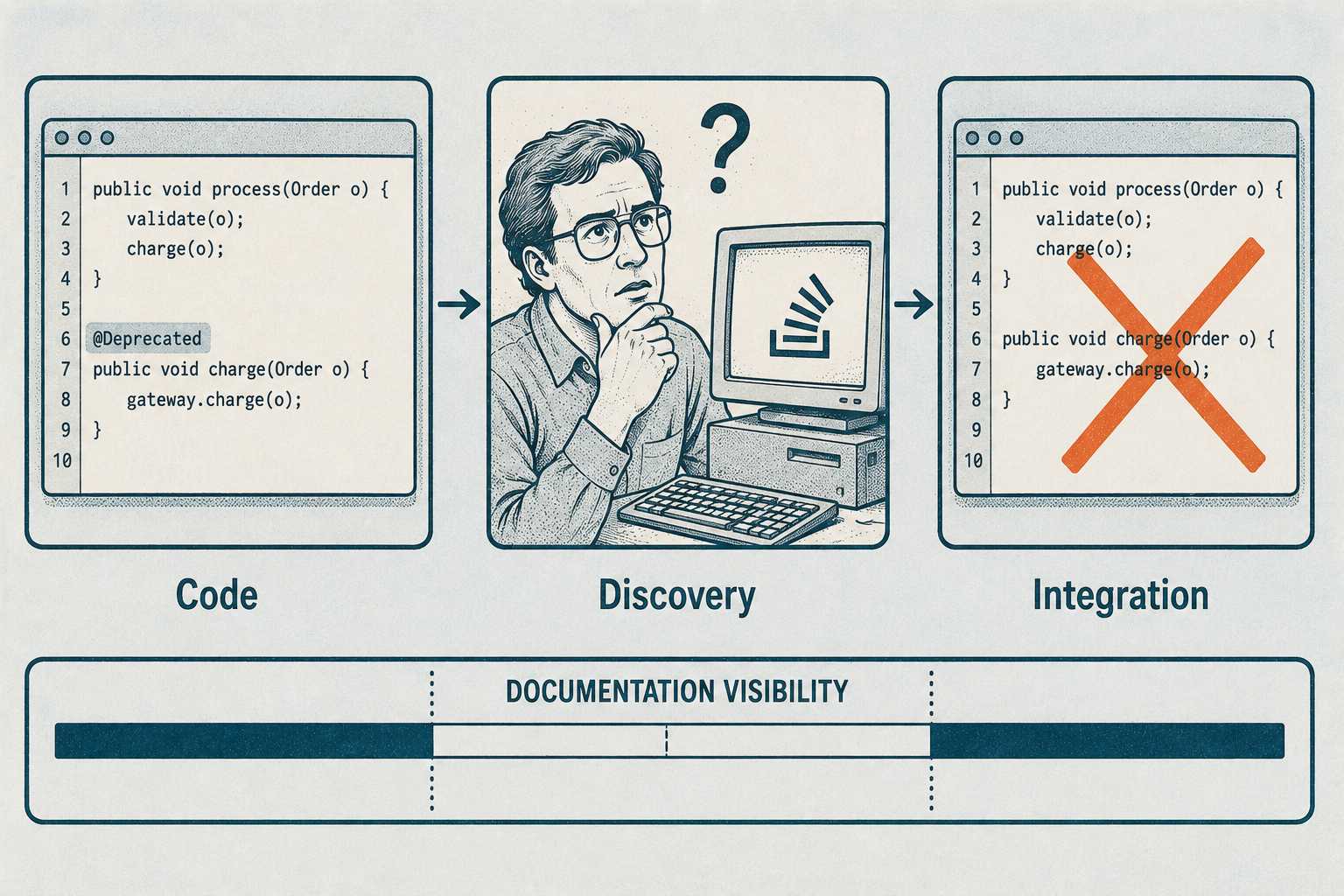
You have to actively manage the visibility of the old pattern.
One effective strategy is the brownout. A brownout is a planned, temporary outage of a deprecated endpoint or feature. You disable it for fifteen minutes, then bring it back online. It is a loud, unavoidable signal to consumers that they are relying on something that is going away. Companies like Stripe, Twilio, and Meta use this technique regularly because documentation updates and deprecation emails often go unnoticed. When errors start appearing in logs, developers pay attention.
Another strategy is using HTTP response headers. The Deprecation and Sunset headers, now standardized in RFC 9745, allow you to programmatically notify clients that an endpoint is marked for removal. It is a machine-readable warning that can trigger alerts in the consumer's own monitoring systems. You can also pair these with an X-API-Warn response header, which client SDKs can intercept and print to stdout.
But these technical signals must be paired with documentation. The developer portal should clearly flag deprecated features with their sunset dates. Tutorials and quickstart guides must be updated to use the new patterns exclusively. You cannot tell consumers to migrate while simultaneously teaching new users the old way.
There is also an ownership problem here. The gap between what engineering commits to in the code and what gets published to external-facing documentation is often a gap between who wrote the annotation and who is responsible for the developer portal. Technical writers need to stay close to engineering teams and actively gather information on what is being deprecated, when, why, and what the transition plan is. When that communication breaks down, the deprecation notice lives in the codebase and nowhere else.
The Day the Bill Comes Due
Eventually, the grace period ends. The backwards-compatible change becomes a breaking change.
This is when the gap between engineering intent and published documentation becomes painful. If the deprecation was only documented in a Jira ticket or an internal Slack channel, the support team is going to have a very bad week. An experience report on deprecation and technical debt found an uneven distribution of deprecation debt among deprecated services, with the cost of backwards compatibility accumulating silently over years until it becomes unavoidable.
The most common failure modes are predictable. Teams assume that semantic versioning alone communicates intent, forgetting that not all API consumers read release notes the day they are published. They mark fields as deprecated without providing a concrete removal date. They forget that consumers who integrated two years ago may never have seen the deprecation notice at all. And they fail to connect the deprecation to a concrete timeline that gives consumers a real reason to act.
Managing API stability isn't just about writing better release notes. It is an operational problem. It requires a system that connects what happens in the codebase to what gets published to the world.
When engineering teams rely on manual processes to update external documentation, things get missed. The intent gets lost. The "harmless" change ships, but the migration guide doesn't. The developer portal still shows the old pattern. The quickstart guide still teaches the deprecated approach. And eighteen months later, the major version lands and everyone is surprised.
This is the operational gap Doc Holiday is designed to close. Doc Holiday surfaces deprecation timelines, migration paths, and compatibility metadata from engineering workflows, giving reviewers a structured starting point rather than a blank page. Human validation is still part of the process; the difference is that the raw material is extracted automatically instead of assembled by hand. It gives the technical lead managing API stability a reliable structure to communicate intent, rather than just hoping someone remembers to update the wiki.